


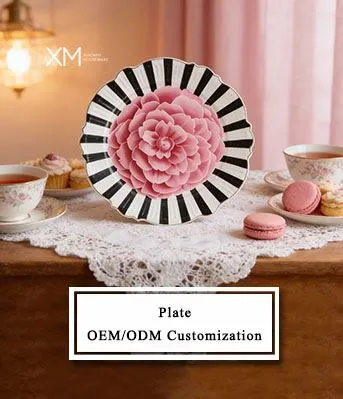




Hey there! As a supplier of porcelain round soup plates, I often get asked this question: Do porcelain round soup plates have a uniform thickness? Well, let's dive right into it.
First off, it's important to understand that in an ideal world, we'd love for every porcelain round soup plate to have a uniform thickness. Uniform thickness can bring a bunch of benefits. For one, it gives the plate a more balanced look and feel. When you pick up a plate, it doesn't tilt or feel off - balance because the weight is evenly distributed. This is not only aesthetically pleasing but also makes the plate more comfortable to hold while you're having your soup.
Another advantage of uniform thickness is in terms of durability. A plate with consistent thickness is less likely to have weak spots. When you're using a soup plate, you might put it in the microwave, dishwasher, or even stack it with other plates. If there are areas of the plate that are thinner than others, these spots are more prone to cracking or chipping. For example, if you stack plates and there's a thin section on one plate, the pressure from the plates on top can cause that thin area to break.
However, achieving a completely uniform thickness in porcelain round soup plates is no easy feat. The process of making porcelain plates involves several steps, and each step can introduce variations in thickness.
Let's start with the initial shaping of the plate. Usually, porcelain is first molded into the basic shape of a round soup plate. This can be done using a variety of methods, such as throwing on a potter's wheel or using a mold. When throwing on a wheel, it's really up to the skill of the potter to keep the thickness consistent as they shape the plate. Even the most experienced potters can have slight variations, especially when dealing with larger plates. The potter has to apply the right amount of pressure at different points on the plate, and it's easy to accidentally make one area a bit thinner or thicker.
If a mold is used, there can still be issues. The mold itself might have minor imperfections, or the way the porcelain is pressed into the mold can cause uneven distribution. Sometimes, air bubbles can get trapped in the porcelain during the molding process, and these bubbles can affect the thickness of the final plate.
After the plate is shaped, it goes through a drying process. During drying, the porcelain loses moisture and shrinks. The shrinkage rate might not be the same across the entire plate. Areas that are thicker might dry and shrink at a different rate than thinner areas. This can lead to further variations in thickness.
Then comes the firing process. Firing is a crucial step in making porcelain plates, as it hardens the material. But it can also cause changes in thickness. The heat in the kiln might not be evenly distributed, so different parts of the plate can experience different temperatures. This can result in uneven expansion and contraction, which again affects the thickness of the plate.
Even with all these challenges, we at our company take a lot of steps to minimize the variations in thickness. We use high - quality molds that are carefully inspected for any flaws. Our potters are highly skilled and undergo regular training to improve their techniques. During the drying and firing processes, we closely monitor the conditions to ensure as much consistency as possible.
Now, let's talk about how the thickness of porcelain round soup plates compares to other types of porcelain plates. For example, Floral Porcelain Dessert Plate. Dessert plates are generally smaller and thinner than soup plates. Since they are smaller, it's a bit easier to achieve a more uniform thickness. But the same principles apply - the manufacturing process can still introduce variations.
Porcelain Dinner Plate is usually larger than a soup plate. Making a larger plate with a uniform thickness is even more challenging. The bigger the surface area, the more chances there are for variations in the molding, drying, and firing processes.
Blue Porcelain Dessert Plate also has its own set of considerations. The color application and any decorative elements can sometimes add a bit of thickness in certain areas. But overall, we try to make sure that these added elements don't significantly affect the overall balance and thickness of the plate.
So, to answer the question, porcelain round soup plates don't typically have a completely uniform thickness. But with proper manufacturing techniques and quality control measures, we can keep the variations to a minimum.
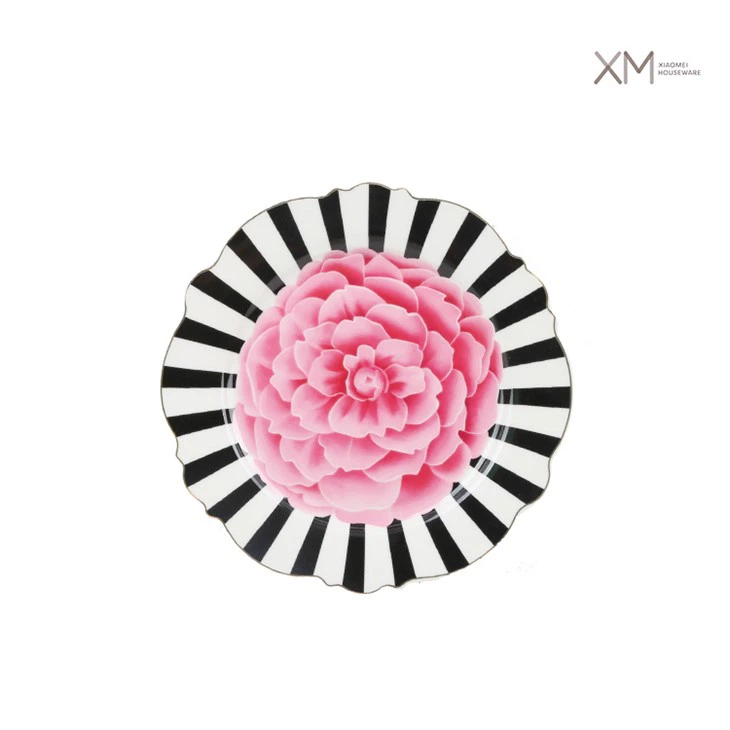

If you're in the market for high - quality porcelain round soup plates, we'd love to talk to you. Whether you're a restaurant owner looking to stock up on soup plates for your customers or an individual who appreciates fine porcelain, we have a wide range of options to choose from. Our plates are not only carefully crafted to minimize thickness variations but also come in different designs and patterns to suit your taste.
If you're interested in learning more or placing an order, feel free to reach out. We're always happy to have a chat about our products and how they can meet your needs. Just get in touch, and we'll start the conversation about bringing our beautiful porcelain round soup plates to your table.
References:
- General knowledge of porcelain plate manufacturing processes
- Industry experience as a porcelain round soup plate supplier