


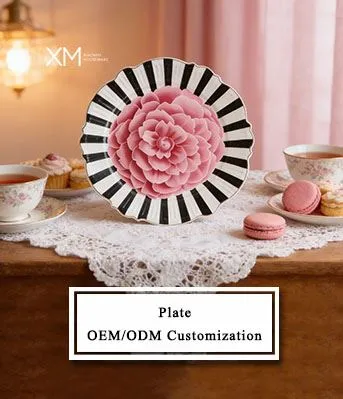



When it comes to the world of dining and tableware, ceramic round plates hold a special place. As a proud supplier of Ceramic Round Plate, I've had the privilege of delving deep into the materials and processes that go into creating these timeless pieces. In this blog post, I'll take you on a journey through the various materials used to make ceramic round plates, exploring their unique properties and the impact they have on the final product.
Clay: The Foundation of Ceramic Round Plates
At the heart of every ceramic round plate lies clay, a natural material that has been used for thousands of years to create functional and decorative objects. Clay is a fine-grained soil that is rich in minerals such as silica, alumina, and water. It is formed over time through the weathering and erosion of rocks, and it can be found in a variety of colors and textures depending on its origin.
There are several types of clay that are commonly used in the production of ceramic round plates, each with its own unique properties and characteristics. Some of the most popular types of clay include:
- Earthenware Clay: This is the most common type of clay used in the production of ceramic round plates. It is a relatively soft and porous clay that is fired at a low temperature, typically between 1,000 and 1,200 degrees Celsius. Earthenware clay is known for its natural earthy colors and its ability to absorb glazes and decorations.
- Stoneware Clay: Stoneware clay is a harder and more dense clay than earthenware clay. It is fired at a higher temperature, typically between 1,200 and 1,300 degrees Celsius, which gives it a more durable and water-resistant finish. Stoneware clay is often used in the production of high-quality ceramic round plates that are suitable for everyday use.
- Porcelain Clay: Porcelain clay is the purest and most refined type of clay used in the production of ceramic round plates. It is a white, translucent clay that is fired at a very high temperature, typically between 1,300 and 1,400 degrees Celsius. Porcelain clay is known for its delicate and elegant appearance, as well as its strength and durability.
Glazes: Adding Color and Protection
Once the ceramic round plates have been formed from clay, they are typically coated with a layer of glaze. Glaze is a glassy substance that is applied to the surface of the ceramic to add color, texture, and protection. It is made from a mixture of minerals, such as silica, alumina, and fluxes, which are melted together at a high temperature to form a smooth, glassy surface.
There are several types of glazes that are commonly used in the production of ceramic round plates, each with its own unique properties and characteristics. Some of the most popular types of glazes include:
- Transparent Glaze: Transparent glaze is a clear, glassy glaze that allows the natural color and texture of the ceramic to show through. It is often used in the production of high-quality ceramic round plates that are designed to showcase the beauty of the clay.
- Opaque Glaze: Opaque glaze is a solid, non-transparent glaze that covers the surface of the ceramic completely. It is often used in the production of ceramic round plates that are designed to be decorated with patterns or designs.
- Matte Glaze: Matte glaze is a dull, non-reflective glaze that gives the ceramic a soft, velvety finish. It is often used in the production of ceramic round plates that are designed to have a more rustic or natural look.
- Glossy Glaze: Glossy glaze is a shiny, reflective glaze that gives the ceramic a smooth, polished finish. It is often used in the production of ceramic round plates that are designed to have a more modern or elegant look.
Other Materials: Enhancing the Design and Functionality
In addition to clay and glazes, there are several other materials that are commonly used in the production of ceramic round plates to enhance their design and functionality. Some of these materials include:
- Decorative Elements: Decorative elements such as decals, transfers, and hand-painted designs can be added to the surface of the ceramic round plates to create unique and personalized looks. These elements can be made from a variety of materials, including paper, plastic, and ceramic.
- Reinforcing Materials: Reinforcing materials such as fiberglass, carbon fiber, and metal can be added to the clay or glaze to increase the strength and durability of the ceramic round plates. These materials are often used in the production of high-quality ceramic round plates that are designed for heavy use or for use in commercial settings.
- Functional Elements: Functional elements such as handles, spouts, and lids can be added to the ceramic round plates to make them more convenient and practical to use. These elements can be made from a variety of materials, including ceramic, metal, and plastic.
The Importance of Quality Materials
As a supplier of Ceramic Round Plate, I understand the importance of using high-quality materials in the production of our products. The quality of the materials used in the production of ceramic round plates has a direct impact on the final product's appearance, durability, and functionality. By using the best possible materials, we are able to create ceramic round plates that are not only beautiful and stylish but also strong, durable, and long-lasting.

In addition to using high-quality materials, we also pay close attention to the manufacturing process to ensure that our ceramic round plates are made to the highest standards of quality. We use state-of-the-art equipment and techniques to ensure that each plate is formed, fired, and glazed to perfection. We also conduct rigorous quality control checks at every stage of the manufacturing process to ensure that our products meet or exceed our customers' expectations.
Contact Us for Your Ceramic Round Plate Needs
If you're in the market for high-quality ceramic round plates, look no further than our company. As a leading supplier of Ceramic Round Plate, we offer a wide range of products to suit every taste and budget. Whether you're looking for a simple and elegant plate for everyday use or a more elaborate and decorative plate for special occasions, we have the perfect solution for you.
To learn more about our products or to place an order, please contact us today. Our friendly and knowledgeable customer service team will be happy to assist you with any questions or concerns you may have. We look forward to hearing from you and helping you find the perfect ceramic round plates for your needs.
References
- "Ceramics: A Comprehensive Guide to Materials, Processes, and Applications." John Wiley & Sons, Inc., 2015.
- "The Art of Ceramics: A History of Ceramic Art from Prehistory to the Present." Thames & Hudson, 2012.
- "Ceramic Glazes: A Practical Guide to Formulation and Application." Schiffer Publishing, Ltd., 2008.