


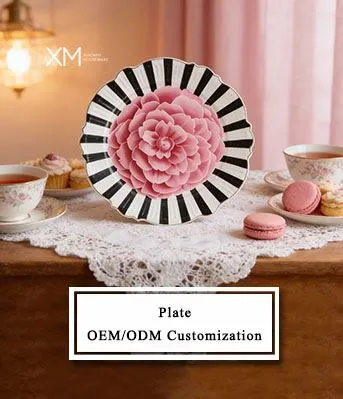




In the world of porcelain, the glaze on dinner plates is not only a decorative element but also a crucial factor that affects the plate's appearance, durability, and even its functionality. As a supplier of high - quality porcelain dinner plates, I've often been intrigued by the question: What is the refractive index of the glaze on porcelain dinner plates?
Understanding the Basics of Refractive Index
The refractive index is a fundamental optical property of a material. It is defined as the ratio of the speed of light in a vacuum to the speed of light in the medium. Mathematically, it is expressed as (n = \frac{c}{v}), where (n) is the refractive index, (c) is the speed of light in a vacuum ((c\approx 3\times10^{8}m/s)), and (v) is the speed of light in the material.
When light passes from one medium to another with a different refractive index, it changes direction. This phenomenon is called refraction. The refractive index of a material determines how much the light will bend. A higher refractive index means that light will slow down more in the material and bend more when entering or exiting the material.
The Role of Glaze in Porcelain Dinner Plates
Glaze plays multiple roles in porcelain dinner plates. Firstly, it provides a smooth, non - porous surface, which makes the plates easy to clean and resistant to stains. Secondly, it enhances the aesthetic appeal of the plates. The glaze can give the plates a shiny, glossy finish or a more matte look, depending on the formulation and firing process.
The glaze also protects the underlying porcelain body from damage. It acts as a barrier against scratches, abrasions, and chemical attacks. In addition, the glaze can affect the way light interacts with the plate, influencing its color, luster, and overall visual appearance.
Factors Affecting the Refractive Index of Porcelain Glaze
The refractive index of porcelain glaze is influenced by several factors:
Chemical Composition
The chemical composition of the glaze is the most significant factor. Different oxides and minerals in the glaze formulation have different refractive indices. For example, silica ((SiO_{2})) is a common component in porcelain glazes. It has a relatively low refractive index. On the other hand, oxides such as lead oxide ((PbO)) and zirconium oxide ((ZrO_{2})) have higher refractive indices. By adjusting the proportions of these components, the refractive index of the glaze can be controlled.
Firing Conditions
The firing process also has a profound impact on the refractive index of the glaze. During firing, the chemical reactions in the glaze cause the formation of a glassy phase. The temperature, firing time, and atmosphere (oxidizing or reducing) can all affect the structure and density of the glassy phase, which in turn affects the refractive index. For instance, a higher firing temperature may lead to a more dense and homogeneous glassy structure, resulting in a higher refractive index.
Thickness of the Glaze
The thickness of the glaze layer can influence the overall optical properties of the plate. A thicker glaze layer may cause more light to be refracted and reflected within the glaze, potentially changing the apparent refractive index. However, this effect is relatively minor compared to the chemical composition and firing conditions.
Typical Refractive Index Values for Porcelain Glaze
The refractive index of porcelain glaze typically ranges from about 1.4 to 1.6. This range can vary depending on the specific type of glaze and the manufacturing process. For example, a clear, high - silica glaze may have a refractive index closer to 1.4, while a glaze with a high content of heavy metal oxides may have a refractive index approaching 1.6.
Importance of Refractive Index in Porcelain Dinner Plate Design
The refractive index of the glaze is an important consideration in the design of porcelain dinner plates. A higher refractive index can give the plates a more brilliant and lustrous appearance. It can enhance the reflection and refraction of light, making the colors on the plate appear more vivid and the patterns more distinct.
On the other hand, a lower refractive index may result in a more subdued, matte finish, which can be desirable for certain aesthetic styles. For example, in traditional Chinese porcelain, some pieces are designed with a matte glaze to achieve a subtle and elegant look.
Our Product Line and Refractive Index
At our company, we offer a wide range of porcelain dinner plates, each with its unique glaze. For example, our 14 - inch Oval Ceramic Plate Fish Porcelain Plate With A Retro Blue And White Hand - painted Underglaze Edge features a glaze that has been carefully formulated to have a refractive index that enhances the detailed hand - painted designs. The glaze has a slightly higher refractive index, which makes the blue and white patterns stand out and gives the plate a rich, lustrous appearance.
Our Floral Porcelain Dessert Plate has a glaze with a lower refractive index, creating a soft, matte finish that complements the delicate floral patterns. This gives the plate an elegant and refined look, perfect for serving desserts.
The Blue Porcelain Soup Plate is another example. The glaze on this plate has a balanced refractive index, providing a beautiful sheen while keeping the colors of the blue glaze rich and true.
Contact Us for Purchase and Consultation
If you are in the market for high - quality porcelain dinner plates, we invite you to contact us for more information. Whether you are a restaurant owner looking to upgrade your tableware, a retailer seeking unique products for your store, or an individual with a passion for fine porcelain, our team of experts is ready to assist you. We can provide detailed information about the refractive index and other properties of our glazes, and help you choose the perfect plates for your needs.


References
- "Porcelain Technology" by H. E. McGovern
- "The Physics of Materials" by John M. Ziman
- "Optical Properties of Glass" by D. R. Uhlmann and N. J. Kreidl