


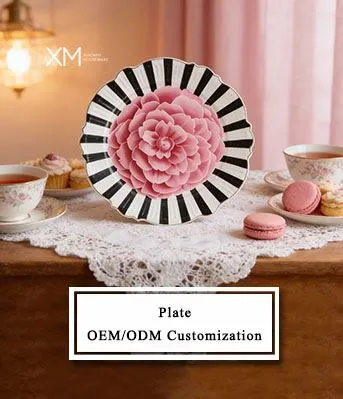



Ceramic round plates have long been a staple in households and commercial kitchens around the world. Their aesthetic appeal, durability, and heat - retention properties make them a popular choice for serving a variety of dishes. One question that often arises among consumers is whether ceramic round plates have a non - stick surface. As a supplier of Ceramic Round Plate, I am well - versed in the characteristics of these plates and am eager to share some insights.
Understanding Ceramic Materials
Ceramics are made from inorganic, non - metallic materials, typically clay, which are shaped and then fired at high temperatures. This firing process gives ceramics their hardness and durability. The composition of ceramic materials can vary widely, and this variation can have a significant impact on the surface properties of the plates.
Traditional ceramic round plates do not inherently have a non - stick surface. The surface of a basic ceramic plate is smooth, but it is not designed to prevent food from sticking. When food is cooked or served on a regular ceramic plate, it can adhere to the surface, especially if the food contains fats or sugars that caramelize or burn during the cooking or heating process.
Non - Stick Treatments on Ceramic Plates
However, in recent years, there has been a growing demand for ceramic round plates with non - stick properties. To meet this demand, manufacturers have developed various techniques to apply non - stick coatings to ceramic surfaces.
One common method is to use a ceramic - based non - stick coating. These coatings are made from a combination of ceramic particles and other polymers. They are applied to the surface of the plate during the manufacturing process and then cured at high temperatures. The result is a smooth, non - porous surface that reduces the adhesion of food.
Another approach is to use nano - technology. Nano - ceramic coatings create a microscopic texture on the surface of the plate that repels food. These coatings are extremely thin and durable, and they can provide excellent non - stick performance.
Advantages of Non - Stick Ceramic Round Plates
Non - stick ceramic round plates offer several advantages over traditional ceramic plates. Firstly, they are much easier to clean. Since food does not stick to the surface, you can simply wipe the plate with a damp cloth or rinse it under running water. This saves time and effort, especially when dealing with stubborn stains.
Secondly, non - stick ceramic plates can help reduce the amount of oil or fat used in cooking. When cooking on a non - stick surface, you can use less oil because the food is less likely to stick. This can be beneficial for health, as it reduces the overall fat content in your diet.
In addition, non - stick ceramic round plates are more versatile. They can be used for a wider range of cooking methods, including frying, baking, and grilling. You can cook delicate foods such as eggs or fish without worrying about them breaking apart or sticking to the plate.
Limitations of Non - Stick Ceramic Round Plates
Despite their many advantages, non - stick ceramic round plates also have some limitations. One of the main concerns is the durability of the non - stick coating. Over time, the coating can wear off, especially if the plate is exposed to abrasive cleaning tools or high - temperature cooking. Once the coating is damaged, the plate may lose its non - stick properties and become more difficult to clean.
Another limitation is that non - stick ceramic plates may not be suitable for all types of cooking. For example, they may not be ideal for searing meats at very high temperatures, as the high heat can damage the non - stick coating.

How to Choose Non - Stick Ceramic Round Plates
When choosing non - stick ceramic round plates, there are several factors to consider. Firstly, look for plates with a high - quality non - stick coating. Read product reviews and check the manufacturer's specifications to ensure that the coating is durable and long - lasting.
Secondly, consider the thickness and weight of the plate. Thicker plates tend to be more durable and better at retaining heat, but they may also be heavier and more difficult to handle.
Finally, pay attention to the design and style of the plate. Choose a plate that complements your kitchen decor and meets your specific needs.
Maintenance of Non - Stick Ceramic Round Plates
To ensure the longevity of your non - stick ceramic round plates, proper maintenance is essential. Avoid using abrasive cleaning tools such as steel wool or harsh scrubbers, as these can scratch the non - stick coating. Instead, use a soft sponge or cloth and mild dish soap.
When cooking on non - stick ceramic plates, use low to medium heat settings. High heat can damage the non - stick coating and reduce its effectiveness. Also, avoid using metal utensils on the plates, as they can scratch the surface.
Market Trends for Non - Stick Ceramic Round Plates
The market for non - stick ceramic round plates is growing steadily. Consumers are becoming more aware of the benefits of non - stick cookware, and they are increasingly looking for high - quality, durable options. In addition, the demand for eco - friendly and healthy cookware is also driving the growth of the non - stick ceramic plate market.
Manufacturers are constantly innovating to improve the performance and durability of non - stick ceramic plates. They are developing new coating technologies and exploring new materials to create plates that are more resistant to wear and tear, and that offer better non - stick performance.
Conclusion
In conclusion, while traditional ceramic round plates do not have a non - stick surface, modern manufacturing techniques have made it possible to produce ceramic plates with excellent non - stick properties. Non - stick ceramic round plates offer many advantages, including easy cleaning, reduced oil usage, and versatility in cooking. However, they also have some limitations, such as the durability of the non - stick coating.
As a supplier of Ceramic Round Plate, we are committed to providing high - quality non - stick ceramic plates that meet the needs of our customers. Whether you are a home cook or a professional chef, our plates are designed to make your cooking and serving experience more enjoyable.
If you are interested in purchasing our non - stick ceramic round plates or have any questions about our products, we encourage you to contact us for a procurement discussion. We look forward to working with you to meet your ceramic plate needs.
References
- "Ceramic Materials Science and Engineering" by J. Reed.
- Industry reports on cookware market trends.
- Product specifications and research from ceramic plate manufacturers.