


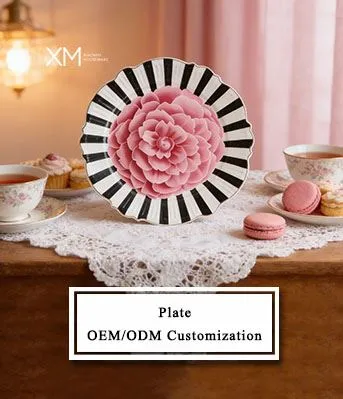




As a supplier of porcelain dinner plates, I often get asked, "Are porcelain dinner plates safe for food?" It's a valid concern, especially when it comes to what we put on our dining tables. In this blog, I'll share some insights based on my experience in the industry and what I've learned about the safety of porcelain dinner plates.
First off, let's understand what porcelain is. Porcelain is a type of ceramic material made from a special clay called kaolin, along with other minerals like feldspar and quartz. It's fired at super - high temperatures, usually between 1200°C and 1400°C. This high - temperature firing gives porcelain its unique properties, like being hard, durable, and non - porous.
One of the biggest reasons porcelain is a popular choice for dinner plates is its safety. When properly manufactured, porcelain is a non - toxic material. It doesn't leach any harmful chemicals into your food. Unlike some plastics or metals that might react with acidic or alkaline foods, porcelain remains stable. Whether you're serving a tangy tomato sauce or a creamy dessert, you don't have to worry about the plate contaminating your meal.
The non - porous nature of porcelain also plays a huge role in its safety. Since it doesn't have tiny holes or pores like some other materials, it doesn't absorb food particles, bacteria, or odors. This means that after you wash your porcelain dinner plate, it'll be truly clean. There won't be any hidden food residues that can grow bacteria over time. A simple wash with warm, soapy water is usually enough to keep your porcelain plates hygienic.
But, like with any product, the quality of manufacturing matters. There are some factors that can affect the safety of porcelain dinner plates. For example, if the glaze used on the plate isn't properly formulated or fired, it could potentially contain lead or cadmium. These are heavy metals that are extremely harmful if ingested. However, in countries with strict safety regulations, like the United States and the European Union, there are limits on the amount of lead and cadmium that can be in dinnerware. Reputable manufacturers follow these regulations to ensure that their products are safe.
As a supplier, I make sure that all the Floral Porcelain Dinner Plate and White Porcelain Plate I offer meet these safety standards. We work closely with our manufacturers to test the plates regularly. We check for any signs of heavy metal contamination and make sure that the glaze and the porcelain body are of the highest quality.
Another aspect of safety is how the plates are used. Porcelain is strong, but it's still breakable. If a plate has a crack or a chip, it's best not to use it for food. The cracked area could harbor bacteria, and there's also a risk of small porcelain pieces breaking off and getting into your food.
Let's talk about the aesthetic and practical value of porcelain dinner plates in relation to safety. Their smooth surface makes them easy to clean, which is crucial for food safety. And they come in a wide variety of designs. Whether you're into elegant Floral Porcelain Dinner Plate that add a touch of charm to your table or classic White Porcelain Plate that go with any decor, you can choose based on your personal style without sacrificing safety.
Even when it comes to desserts, we have great options like the Blue Porcelain Dessert Plate. These smaller plates are not only beautiful but also just as safe for serving sweet treats as the larger dinner plates.
In summary, porcelain dinner plates are generally safe for food. When they're well - made, follow safety regulations, and are used properly, they're a great choice for your dining needs. They offer a combination of safety, durability, and aesthetic appeal.


If you're interested in purchasing high - quality porcelain dinner plates, we'd love to have a chat with you. Whether you're a restaurant owner looking to upgrade your tableware or someone who wants to add some elegance to their home dining, we can provide you with the best options. Reach out to start a discussion about your procurement needs.
References
- "Guide to Dinnerware Safety," Consumer Reports.
- "The Chemistry of Porcelain," Journal of Ceramics and Glass.