





Is a porcelain round soup plate durable?
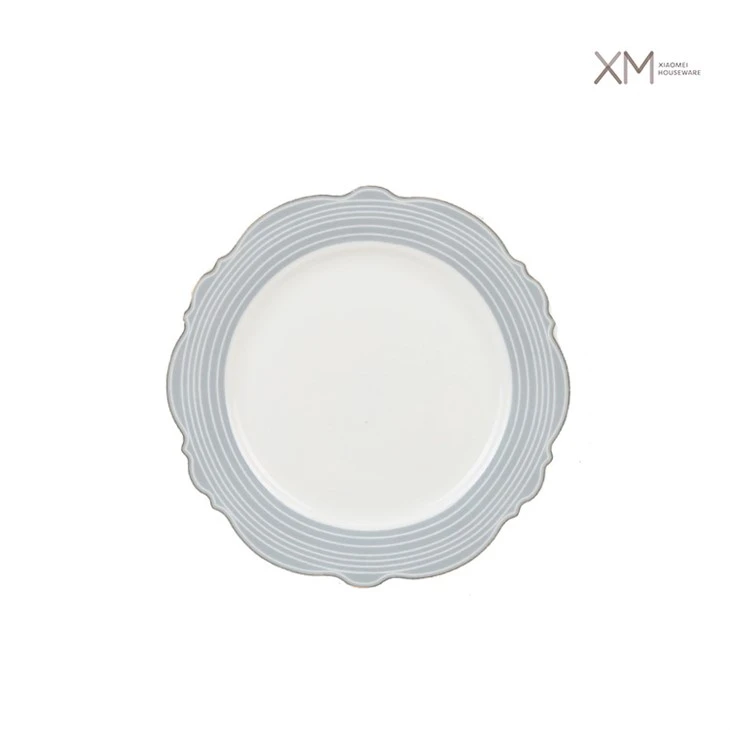
As a supplier of porcelain round soup plates, I often get asked about the durability of these elegant pieces. Porcelain has long been a favorite material for tableware due to its beauty and sophistication, but concerns about its durability are valid. In this blog post, I will delve into the factors that affect the durability of porcelain round soup plates and provide you with a comprehensive understanding of their longevity.

Composition and Manufacturing Process
Porcelain is a ceramic material made from a mixture of clay, feldspar, and quartz. The unique combination of these materials gives porcelain its characteristic strength and translucency. During the manufacturing process, the raw materials are carefully selected and blended to create a homogeneous mixture. This mixture is then shaped into the desired form, such as a round soup plate, and fired at high temperatures in a kiln. The high - temperature firing process vitrifies the porcelain, making it dense and hard.
The quality of the raw materials and the precision of the manufacturing process play a crucial role in determining the durability of the porcelain round soup plate. High - quality porcelain is made from pure and well - graded materials, which results in a more uniform and stronger structure. Additionally, advanced manufacturing techniques ensure that the plates are fired evenly, reducing the risk of internal stresses that can lead to cracking or chipping.
Resistance to Scratches and Chips
One of the main concerns when it comes to the durability of porcelain round soup plates is their resistance to scratches and chips. Porcelain is a relatively hard material, but it is not immune to damage. When used with abrasive utensils or in rough handling, the surface of the plate can be scratched. However, high - quality porcelain plates are designed to be more scratch - resistant. The smooth and dense surface of the porcelain makes it less likely to be scratched by normal use with cutlery.
Chipping is another issue that can affect the durability of porcelain plates. A sharp impact or a collision with a hard object can cause the edge of the plate to chip. To minimize the risk of chipping, our porcelain round soup plates are designed with thickened edges. This extra thickness provides additional strength and protection, making the plates more resistant to accidental impacts.
Thermal Shock Resistance
Thermal shock is a phenomenon that occurs when a material is subjected to rapid changes in temperature. For porcelain round soup plates, this can happen when a hot plate is placed in cold water or vice versa. Porcelain has a relatively low coefficient of thermal expansion, which means it can withstand moderate temperature changes without cracking. However, extreme temperature differences can still cause thermal shock.
To enhance the thermal shock resistance of our porcelain round soup plates, we use special glazes and firing techniques. These measures help to reduce the internal stresses that can occur during temperature changes, making the plates more resilient. It is still important to handle the plates with care and avoid sudden temperature changes to ensure their long - term durability.
Chemical Resistance
Porcelain is highly resistant to most chemicals, which makes it an ideal material for tableware. It can withstand the acids and alkalis present in food and beverages without being corroded. This chemical resistance ensures that the plates maintain their appearance and integrity over time. Our porcelain round soup plates are also lead - free and cadmium - free, which makes them safe for food contact.
Comparison with Other Materials
When considering the durability of porcelain round soup plates, it is useful to compare them with other materials commonly used for tableware.
- Ceramic: While ceramic is similar to porcelain, it is generally less dense and less durable. Ceramic plates are more prone to scratches, chips, and thermal shock compared to porcelain.
- Glass: Glass plates are fragile and can break easily when dropped or subjected to impact. They also have a lower resistance to thermal shock than porcelain.
- Plastic: Plastic plates are lightweight and inexpensive, but they are not as durable as porcelain. They can scratch easily, and some plastics may release harmful chemicals when exposed to heat or acidic foods.
Our Product Range
In addition to our porcelain round soup plates, we also offer a wide range of other porcelain tableware products. You can explore our Porcelain Dessert Plate Round for a sweet and elegant serving option. Our Porcelain Dinner Plate is perfect for main courses, and the White Porcelain Plate provides a classic and versatile look.
Conclusion
In conclusion, porcelain round soup plates can be highly durable when made from high - quality materials and manufactured with precision. Their resistance to scratches, chips, thermal shock, and chemicals makes them a reliable choice for daily use as well as special occasions. While they require some care to ensure their longevity, the beauty and elegance they bring to the table make them a worthwhile investment.
If you are interested in purchasing our porcelain round soup plates or any other porcelain tableware products, we invite you to contact us for a procurement discussion. We are committed to providing you with high - quality products and excellent customer service.
References
- "Porcelain: A Comprehensive Guide" by Ceramic Institute of America
- "Tableware Materials and Their Properties" by Journal of Food Service Technology
- "Thermal Shock Resistance in Ceramics" by International Journal of Ceramics Science and Technology