





Hey there! As a supplier of porcelain dinner plates, I've had my fair share of hands - on experience with these beautiful pieces. One question that pops up quite often is, "What is the surface texture of porcelain dinner plates?" Let's dig deep into this topic and find out!
First off, porcelain is a type of ceramic that's been around for ages. It's made from a special kind of clay called kaolin, which is fired at super - high temperatures. This firing process gives porcelain its unique characteristics, including its surface texture.
Most porcelain dinner plates have a smooth surface texture. When you run your fingers across a White Porcelain Plate, it's almost like gliding on glass. This smoothness is not just for show; it serves several practical purposes.
For one, a smooth surface is incredibly easy to clean. Imagine you've had a delicious spaghetti dinner with a rich tomato sauce. If you were using a plate with a rough or porous surface, that sauce would get trapped in the nooks and crannies, making it a real pain to scrub off. But with a smooth porcelain plate, you can simply rinse it under warm water, add a bit of dish soap, and voila! The plate is clean as new.
Another advantage of the smooth texture is that it enhances the dining experience. Food slides gracefully across the plate, making it easier to pick up with your utensils. Whether you're using a fork to spear a piece of steak or a spoon to scoop up some mashed potatoes, the smooth surface doesn't impede your movements.
But not all porcelain dinner plates have a completely flat and featureless smoothness. Some have a slightly glossy finish. This gloss is achieved through a special glazing process. The glaze is a layer of glass - like material that's applied to the plate before the final firing. It not only gives the plate a beautiful, shiny appearance but also adds an extra layer of protection.
The glossy texture of a Porcelain Soup Plate can make the soup look even more appetizing. The light reflects off the shiny surface, highlighting the colors and textures of the soup. And just like the smooth surface, the glossy one is also easy to clean. The glaze acts as a barrier, preventing food from sticking to the plate.
On the other hand, there are also porcelain plates with a matte finish. These plates have a more subdued look and feel. The matte texture gives the plate a more rustic or elegant appearance, depending on the design. Matte - finished plates are great for those who prefer a more understated dining style.
The surface of a matte porcelain plate might not be as perfectly smooth as a glossy one. It has a very slight grain to it, almost like fine sandpaper. However, it's still far from rough. This texture can actually be beneficial when it comes to eating certain types of food. For example, a piece of bread with a crusty exterior might sit more securely on a matte plate, preventing it from sliding off.
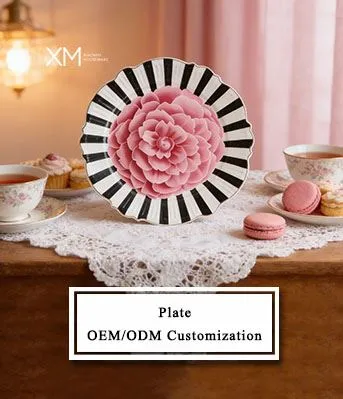
Some porcelain dinner plates also come with embossed or textured designs. These designs can range from simple geometric patterns to elaborate floral motifs. The embossed parts of the plate add a tactile element to the surface. When you touch the plate, you can feel the rise and fall of the design, which adds an extra layer of visual and tactile interest.
For instance, a Porcelain Round Soup Plate with an embossed rim not only looks more decorative but also provides a bit of a grip. When you're holding the plate, your fingers can rest on the raised design, making it easier and more comfortable to carry.
When it comes to manufacturing, the texture of porcelain dinner plates is carefully controlled. The process starts with shaping the clay into the desired plate form. After that, it goes through the initial firing to harden it. Then, the glazing or surface - treating process begins.


For plates with a smooth or glossy finish, the glaze is applied evenly. Workers use different techniques such as dipping, spraying, or brushing to ensure a consistent layer. The plate is then fired again at a high temperature to melt the glaze and bond it to the porcelain surface.
If it's a matte - finished plate, the glaze or surface treatment is formulated to achieve that non - reflective look. Sometimes, special additives are used to create the subtle texture. And for embossed plates, molds are used to press the design into the clay before the firing process.
As a supplier, I offer a wide range of porcelain dinner plates with different surface textures to meet the diverse needs of my customers. Whether you're a restaurant owner looking for plates that are easy to clean and have a professional look, or a home cook who wants to add a touch of elegance to your dining table, I've got you covered.
If you're interested in learning more about our porcelain dinner plates or are thinking of making a purchase, I'd love to have a chat with you. We can discuss your specific requirements, and I can show you samples of the different textures and designs we have available. Don't hesitate to reach out and start the conversation about finding the perfect porcelain dinner plates for you.
References:
- Ceramic Industry Handbook
- Porcelain Manufacturing Guides