


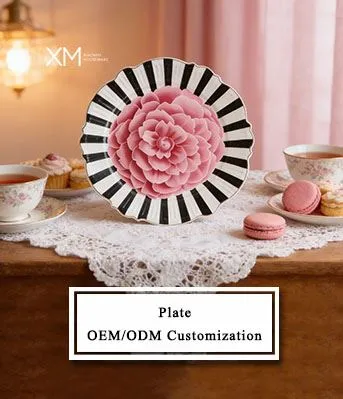




Creating a plate from clay is a rewarding and intricate process that combines artistry with technical skill. As a plate supplier, I've had the privilege of witnessing the transformation of raw clay into beautiful, functional pieces. In this blog, I'll take you through the step-by-step process of making a plate from clay, sharing insights and tips along the way.
Step 1: Selecting the Right Clay
The first step in making a plate is choosing the appropriate clay. There are several types of clay available, each with its own unique properties. For plates, stoneware and porcelain are popular choices due to their durability and ability to hold glaze well. Stoneware is a versatile clay that fires at a relatively high temperature, resulting in a strong and dense finished product. Porcelain, on the other hand, is a fine-grained clay that fires at an even higher temperature, producing a smooth and translucent finish.
When selecting clay, consider the intended use of the plate. If you're making a plate for everyday use, stoneware may be the better option due to its durability. If you're creating a more decorative plate, porcelain may be the preferred choice for its delicate appearance.
Step 2: Preparing the Clay
Once you've selected the clay, it's time to prepare it for shaping. Start by wedging the clay to remove any air bubbles and ensure a uniform consistency. Wedging also helps to align the clay particles, making it easier to work with. To wedge the clay, place it on a clean, flat surface and use your hands to knead and fold it repeatedly. As you work the clay, you'll notice that it becomes more pliable and easier to shape.
Step 3: Shaping the Plate
There are several methods for shaping a plate from clay, including hand-building and using a pottery wheel. Hand-building involves using your hands and simple tools to shape the clay into the desired form. This method is ideal for creating unique and irregularly shaped plates. To hand-build a plate, start by rolling out a flat piece of clay using a rolling pin. Then, use a knife or a pottery tool to cut the clay into a circular shape. You can then use your hands to shape the edges of the plate and add any decorative elements.
Using a pottery wheel is a more traditional method of shaping plates. To use a pottery wheel, place a ball of clay in the center of the wheel and use your hands to center it. Then, use your fingers and a pottery tool to shape the clay into a flat disc. As you spin the wheel, you can use your hands to shape the edges of the plate and create a smooth, even surface.
Step 4: Drying the Plate
After shaping the plate, it's important to let it dry thoroughly before firing. Drying the plate slowly and evenly helps to prevent cracking and warping. To dry the plate, place it on a flat surface in a well-ventilated area. You can also use a drying rack or a piece of cardboard to support the plate. As the plate dries, it will become lighter in color and harder to the touch.
Step 5: Firing the Plate
Once the plate is completely dry, it's time to fire it in a kiln. Firing the plate at a high temperature helps to harden the clay and make it more durable. There are two types of firing: bisque firing and glaze firing. Bisque firing is the first firing, which is done at a relatively low temperature to remove any remaining moisture from the clay and make it porous. Glaze firing is the second firing, which is done at a higher temperature to melt the glaze and create a smooth, shiny surface.


When firing the plate, it's important to follow the manufacturer's instructions for your kiln. Make sure to preheat the kiln to the appropriate temperature and place the plate in the kiln carefully. As the plate fires, it will undergo a chemical change, transforming from a soft, pliable material into a hard, durable object.
Step 6: Glazing the Plate
After firing the plate, it's time to add a glaze. Glaze is a thin layer of glass that is applied to the surface of the plate to give it a smooth, shiny finish and protect it from damage. There are many different types of glazes available, each with its own unique properties and colors. When choosing a glaze, consider the style and color of the plate and the intended use.
To apply the glaze, start by cleaning the surface of the plate to remove any dust or debris. Then, use a brush or a spray gun to apply the glaze evenly to the surface of the plate. Make sure to apply the glaze in thin layers and allow each layer to dry before applying the next. Once the glaze is dry, you can fire the plate again in the kiln to melt the glaze and create a smooth, shiny surface.
Step 7: Finishing the Plate
After firing the plate with the glaze, it's time to finish it. This may involve sanding the edges of the plate to make them smooth and even, or adding any final decorative elements. You can also use a sealant to protect the glaze and make the plate more durable.
Conclusion
Making a plate from clay is a rewarding and creative process that allows you to express your creativity and create unique, functional pieces. As a plate supplier, I'm passionate about sharing my knowledge and expertise with others. If you're interested in learning more about making plates from clay or purchasing high-quality plates, please feel free to [contact us for procurement discussions]. We're here to help you find the perfect plates for your needs.
References
- "The Potter's Handbook" by Janice Tchalenko
- "Ceramics: A Comprehensive Guide" by Susan Peterson
- "Pottery Techniques: A Step-by-Step Guide" by Mark Hewitt