


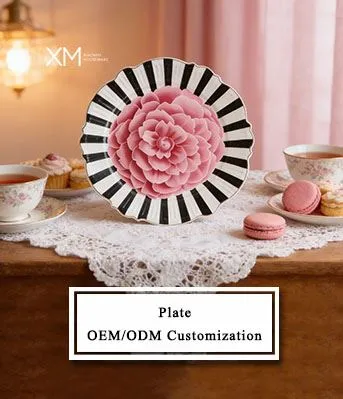




Ceramic round plates have long been an integral part of human civilization, serving not only as functional vessels for food but also as carriers of rich cultural meanings. As a supplier of Ceramic Round Plate, I have witnessed firsthand the diverse cultural significance these plates hold across different societies and time periods.
Historical Origins and Cultural Roots
The history of ceramic round plates dates back thousands of years. In ancient civilizations such as Mesopotamia, Egypt, and China, pottery was one of the earliest forms of art and craftsmanship. The round shape of the plates was not only practical but also held symbolic value. In many cultures, the circle represents unity, wholeness, and infinity. It is a shape that has no beginning or end, suggesting a continuous cycle of life, nature, and the universe.
In ancient China, ceramic round plates were often decorated with intricate patterns and motifs that carried specific cultural and religious meanings. For example, the dragon and phoenix motifs were commonly used to symbolize imperial power, good fortune, and harmony. These plates were not only used for daily meals but also played an important role in religious ceremonies and imperial banquets.
In ancient Greece and Rome, ceramic round plates were also highly valued. They were often used in symposiums, which were social gatherings where people would discuss philosophy, politics, and literature while enjoying food and wine. The plates were decorated with scenes from mythology, history, and daily life, providing a visual narrative of the culture and values of the time.
Cultural Significance in Different Societies
Asian Cultures
In Asian cultures, ceramic round plates are deeply ingrained in the culinary and social traditions. In Japan, for instance, the art of arranging food on a plate, known as "kappo," is highly respected. The round shape of the plate provides a harmonious and balanced backdrop for the presentation of food, which is often considered a form of art. Japanese ceramic round plates are typically made with delicate and minimalist designs, emphasizing the natural beauty of the materials and the simplicity of the form.
In India, ceramic round plates are used in religious ceremonies and festivals. They are often decorated with colorful patterns and symbols that represent different deities and aspects of Hindu mythology. The plates are used to offer food and flowers to the gods, and they are also used for communal meals during festivals. The round shape of the plate is believed to symbolize the unity of the community and the connection between the people and the divine.
Western Cultures
In Western cultures, ceramic round plates have also played an important role in culinary and social traditions. In France, for example, the art of fine dining is closely associated with the use of high-quality ceramic plates. French ceramic round plates are often made with elaborate designs and luxurious materials, reflecting the country's rich culinary heritage and tradition of elegance.
In the United States, ceramic round plates are commonly used in everyday meals as well as in special occasions. They come in a wide variety of styles and designs, from simple and modern to traditional and ornate. The round shape of the plate is considered to be a classic and timeless design that is suitable for any occasion.

Symbolism and Meaning
Beyond their practical and aesthetic functions, ceramic round plates also carry symbolic meanings in different cultures. In many cultures, the round shape of the plate is associated with the sun, which is a symbol of life, energy, and warmth. The sun is often considered to be the center of the universe, and the round shape of the plate represents the unity and harmony of all things.
In some cultures, the round shape of the plate is also associated with the moon, which is a symbol of femininity, intuition, and emotional balance. The moon is often considered to be a source of inspiration and creativity, and the round shape of the plate represents the cyclical nature of life and the changing phases of the moon.
In addition to the symbolic meanings associated with the round shape, the decorations and patterns on ceramic round plates also carry specific cultural and religious meanings. For example, in Chinese culture, the lotus flower is a symbol of purity, enlightenment, and spiritual growth. A ceramic round plate decorated with a lotus flower pattern would therefore carry these symbolic meanings and would be considered a auspicious and meaningful gift.
Contemporary Use and Cultural Exchange
In the contemporary world, ceramic round plates continue to be popular for both practical and decorative purposes. They are used in homes, restaurants, and cafes around the world, and they are also collected as works of art. With the increasing globalization and cultural exchange, ceramic round plates from different cultures are now more accessible and appreciated than ever before.
As a supplier of Ceramic Round Plate, I am proud to offer a wide range of high-quality ceramic round plates that reflect the diverse cultural heritage and traditions of different societies. Our plates are made with traditional craftsmanship techniques and modern design sensibilities, ensuring that they are both beautiful and functional.
Whether you are looking for a classic and elegant plate for a formal dinner or a unique and colorful plate for a casual meal, we have the perfect plate for you. Our plates are suitable for a variety of occasions, from everyday use to special events, and they make a great gift for friends and family.
Conclusion
In conclusion, ceramic round plates are not just ordinary objects; they are carriers of rich cultural meanings and traditions. From their historical origins to their contemporary use, these plates have played an important role in human civilization and continue to be valued for their beauty, functionality, and symbolic significance.
As a supplier of Ceramic Round Plate, I am committed to providing our customers with the highest quality products that reflect the diversity and richness of global culture. If you are interested in learning more about our products or would like to discuss a potential purchase, please do not hesitate to contact us. We look forward to hearing from you and helping you find the perfect ceramic round plates for your needs.
References
- "The History of Pottery" by Paul Atterbury
- "Japanese Ceramics: Tradition and Innovation" by John Stevenson
- "Indian Pottery: A Cultural History" by Poonam Das
- "French Ceramics: From the Renaissance to the Present" by Christopher Wood