


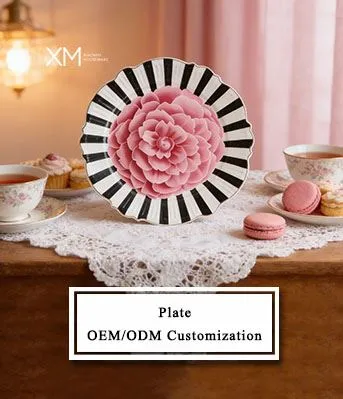

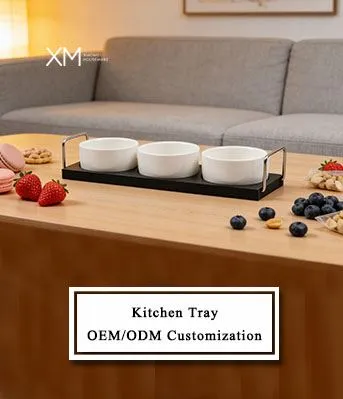


Shape and size: Plate is usually larger and flat, suitable for holding large amounts of food or as a decorative table; saucer is relatively small, may be more rounded or deeper in shape, and is more suitable for holding small amounts of food or spices. Dishes are usually shallow, with a larger diameter and flat edges, suitable for holding light foods such as snacks and snacks; plates are relatively deep, with a moderate diameter and may have decorative edges, and are suitable for holding main dishes, salads and other smaller portions. Great food.
Purpose: Plates are mainly used to hold smaller portions of food, such as snacks, fruits, snacks, etc., and can also be used as dessert plates, salad plates, etc.; plates are more suitable for holding larger portions of food, such as main dishes, meats, etc. , stir-fry, etc. In addition, plates are usually shallow, suitable for holding food directly with your hands, while plates are deep, requiring the use of utensils to easily pick up food.
Material: Saucers and plates are made of a variety of materials, including ceramic, plastic, glass, stainless steel, and more. But in some cases it may be preferable to use a thinner material, such as thin porcelain or glass, to highlight its lightness and elegance. Plates, on the other hand, may prefer thicker materials to increase their durability and load-bearing capacity.
Cultural implication: In traditional Chinese culture, there are also certain differences between plates and plates. In ancient times, plates were regarded as a relatively low-level tableware and were mostly used in folk meals. Plates are considered high-end tableware and are mostly used for palace banquets. This distinction originated from the hierarchy of ancient societies and gradually faded over time. However, in some traditional customs, the use of plates and plates still has a certain symbolic meaning.