


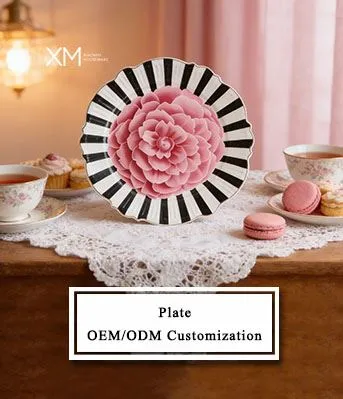




Hey there! As a porcelain dinner plate supplier, I often get asked about the difference between bone china and porcelain dinner plates. It's a common question, and I'm here to break it down for you in a way that's easy to understand.
Let's start with the basics. Both bone china and porcelain are types of ceramic, but they have some key differences in terms of their composition, appearance, and properties.
Composition
Porcelain is made from a mixture of clay, feldspar, and quartz. The clay used in porcelain is typically kaolin, which is a fine-grained white clay that's known for its purity and plasticity. When fired at high temperatures, usually between 1200°C and 1400°C, the clay particles fuse together to form a hard, dense material.
On the other hand, bone china is a special type of porcelain that contains bone ash, usually from cattle bones. The bone ash is added to the clay mixture, typically in a proportion of about 25% to 50%. This gives bone china its unique properties and appearance. The addition of bone ash makes bone china more translucent and gives it a warmer, creamier color compared to regular porcelain.
Appearance
One of the most noticeable differences between bone china and porcelain is their appearance. Porcelain has a bright, white color and a smooth, glossy finish. It has a clean and classic look that's suitable for a variety of table settings, from casual to formal.
Bone china, on the other hand, has a more delicate and elegant appearance. It's more translucent than porcelain, which means that light can pass through it to some extent. This gives bone china a beautiful, glowing effect when held up to the light. The color of bone china is also slightly warmer and creamier than porcelain, which can add a touch of luxury to your table.
Strength and Durability
When it comes to strength and durability, porcelain is generally considered to be more durable than bone china. Porcelain is fired at a higher temperature, which makes it harder and more resistant to chipping and scratching. It can withstand daily use and is suitable for both home and commercial settings.
Bone china, while still relatively strong, is more delicate than porcelain. The addition of bone ash makes it more brittle, and it's more prone to chipping and cracking. However, with proper care, bone china can last a long time. It's best to avoid using bone china in the microwave or dishwasher, as the high heat and agitation can damage it.
Price
Another factor to consider when choosing between bone china and porcelain is the price. Generally, bone china is more expensive than porcelain. The production process of bone china is more complex and requires more precise control, which adds to the cost. Additionally, the use of bone ash, which is a relatively expensive ingredient, also contributes to the higher price of bone china.
Porcelain, on the other hand, is more affordable and offers a good balance between quality and price. It's a popular choice for everyday use and for those who are looking for a practical and stylish dinnerware option.
Uses
Both bone china and porcelain dinner plates have their own unique uses and applications. Porcelain dinner plates are versatile and can be used for a variety of purposes, from serving everyday meals to hosting formal dinner parties. They're also suitable for use in restaurants, cafes, and other commercial settings.
Bone china dinner plates, on the other hand, are often used for special occasions and formal events. Their delicate appearance and luxurious feel make them a popular choice for weddings, anniversaries, and other celebrations. Bone china is also a great choice for collectors and those who appreciate fine china.
Our Porcelain Dinner Plates
As a porcelain dinner plate supplier, we offer a wide range of high-quality porcelain dinner plates to suit your needs. Our plates are made from the finest materials and are crafted with care to ensure durability and beauty.
One of our popular products is the 14-inch Oval Ceramic Plate Fish Porcelain Plate With A Retro Blue And White Hand-painted Underglaze Edge. This plate features a beautiful fish design and a retro blue and white hand-painted underglaze edge, adding a touch of elegance to your table.
We also have the Blue Porcelain Dessert Plate, which is perfect for serving desserts and other sweet treats. The blue color of the plate adds a pop of color to your table and makes your desserts look even more delicious.
And for those who prefer a classic white look, we have the White Porcelain Plate. This plate is simple yet elegant and can be used for a variety of dishes.
Conclusion
In conclusion, the main differences between bone china and porcelain dinner plates lie in their composition, appearance, strength, durability, price, and uses. Porcelain is more durable, affordable, and suitable for everyday use, while bone china is more delicate, elegant, and often used for special occasions.
When choosing between bone china and porcelain dinner plates, it's important to consider your personal preferences, budget, and intended use. If you're looking for a practical and stylish dinnerware option for everyday use, porcelain is a great choice. If you're looking for something more special and luxurious for formal events, bone china might be the way to go.
If you're interested in purchasing our porcelain dinner plates or have any questions, please feel free to contact us. We'd be happy to help you find the perfect dinner plates for your needs.


References
- "Porcelain vs. Bone China: What's the Difference?" The Spruce Eats.
- "Bone China vs. Porcelain: What's the Difference?" Real Simple.