


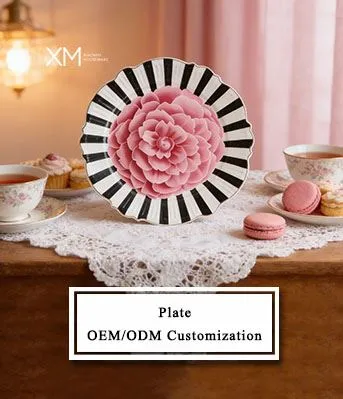




Abrasion resistance is a crucial property when it comes to ceramic round plates. As a long - standing provider of ceramic round plates, I've had in - depth experiences and knowledge about this characteristic.
Understanding Abrasion Resistance in Ceramic Round Plates
Abrasion resistance refers to the ability of a ceramic round plate to withstand wear and tear caused by mechanical contact, such as friction from utensils, scraping during cleaning, and contact with other hard surfaces. This property is of utmost importance for the longevity and performance of the plates.
Ceramic materials are known for their inherent hardness, which provides a certain degree of abrasion resistance. However, the level of abrasion resistance can vary significantly depending on multiple factors. One of the key factors is the composition of the ceramic. Different types of clays, feldspars, and other ingredients used in the manufacturing process can affect the hardness and density of the final product. For example, high - quality porcelain, which is a type of ceramic, often contains kaolin clay. Kaolin gives porcelain a fine - grained and dense structure, enhancing its ability to resist abrasion compared to some common earthenware ceramics that have a coarser texture.
The manufacturing process also plays a crucial role. The firing temperature is a vital aspect. Higher firing temperatures can lead to a more vitrified ceramic structure. When a ceramic round plate is fired at a high enough temperature, the particles in the ceramic bond more tightly together, resulting in increased hardness and better abrasion resistance. Slip casting, pressure molding, or extrusion methods used in shaping the plates can also influence their internal structure and surface uniformity, which in turn affects abrasion resistance.
Surface treatments of ceramic round plates can either improve or diminish their abrasion resistance. Glazing is a common surface treatment for ceramic plates. A well - formulated glaze can act as a protective layer, covering the ceramic body and providing an additional barrier against abrasion. The type of glaze, such as a glossy or matte glaze, can also impact how the plate resists wear. For instance, a glossy glaze is often smoother and may reduce friction during contact with utensils, thus enhancing abrasion resistance compared to a rough matte glaze. On the other hand, improper glazing application, like thin or uneven glazing, can lead to weak spots on the surface, making the plate more prone to abrasion.
Importance of Abrasion Resistance for Consumers
From a consumer's perspective, the abrasion resistance of ceramic round plates is extremely important. In daily use, plates are constantly in contact with metal utensils, which can cause scratches and wear over time. If a plate has poor abrasion resistance, it will start to show signs of damage quickly. Scratches not only make the plate look unattractive but can also create areas where dirt and bacteria can accumulate.
In a commercial setting, such as restaurants or catering services, the demand for abrasion - resistant plates is even higher. These establishments use their plates frequently and subject them to harsher cleaning routines, often including dishwasher use. Plates with good abrasion resistance can withstand the repeated handling, washing, and rubbing against other dishes, maintaining their appearance and functionality for a longer period. This not only reduces the need for frequent replacement of plates but also helps in presenting a consistent and high - quality dining experience to customers.
Measuring Abrasion Resistance of Ceramic Round Plates
There are several methods used to measure the abrasion resistance of ceramic round plates. One common method is the Taber abraser test. In this test, the ceramic plate is placed on a rotating platform, and two abrasive wheels are applied to the surface with a specific load. The wheels rotate as the plate turns, and after a set number of rotations, the weight loss of the plate is measured. A lower weight loss indicates better abrasion resistance.
The sandpaper abrasion test is another simple yet effective way. A piece of sandpaper with a specific grit is rubbed against the surface of the plate with a constant force for a certain number of strokes. Then, the surface of the plate is inspected for visible scratches or damage. This test gives a quick visual indication of the plate's ability to resist abrasion under basic rubbing conditions.
Our Ceramic Round Plates' Abrasion Resistance
As a Ceramic Round Plate supplier, we take great pride in the abrasion resistance of our products. We carefully select the raw materials to ensure the best possible composition. Our porcelain plates, like the Blue Porcelain Soup Plate, are made with high - purity kaolin clay and other carefully chosen additives. This composition provides a dense and hard structure right from the start.
In the manufacturing process, we use advanced firing techniques. Our plates are fired at high temperatures in state - of - the - art kilns. This not only enhances the bonding of the ceramic particles but also gives the plates a smooth and even structure, which is essential for good abrasion resistance.
Our glazing process is also a key factor in the abrasion resistance of our plates. We use high - quality glazes that are specifically formulated to provide a tough and protective layer. Whether it's the Porcelain Soup Plate with its elegant glaze or the Underglaze Colour 12 Inch Round Plate Vintage Floral Ceramic Plate with its unique underglaze decoration, the glaze helps to reduce friction and protect the ceramic body from abrasion. We have also carried out extensive testing on our plates, using the Taber abraser test and sandpaper abrasion test, among other methods. Our results consistently show that our ceramic round plates have excellent abrasion resistance compared to many other products in the market.
Factors Affecting the Abrasion Resistance of Our Products
Although we strive to provide plates with the best abrasion resistance, there are still some factors that can potentially affect it in real - world use. Cleaning methods are a significant factor. Using abrasive cleaners or scouring pads can damage the glaze and the ceramic surface, reducing the plate's abrasion resistance over time. We recommend using mild dishwashing liquids and soft sponges for cleaning our plates to maintain their abrasion - resistant properties.


The frequency of use also matters. Plates that are used multiple times a day will inevitably experience more wear and tear compared to those used less frequently. However, due to the high - quality materials and manufacturing processes we use, our plates can still maintain a good level of abrasion resistance even with regular use.
Conclusion
In conclusion, the abrasion resistance of ceramic round plates is a complex yet vital property. It is determined by a combination of factors such as composition, manufacturing process, and surface treatment. As a supplier, we are committed to providing ceramic round plates with excellent abrasion resistance. Our products, like the Blue Porcelain Soup Plate, Porcelain Soup Plate, and Underglaze Colour 12 Inch Round Plate Vintage Floral Ceramic Plate, are the result of careful material selection, advanced manufacturing techniques, and quality control.
If you are in the market for high - quality ceramic round plates with outstanding abrasion resistance, we invite you to contact us for procurement discussions. We can offer you detailed product information, samples, and competitive pricing. Let's work together to meet your ceramic plate needs.
References
- “Ceramics: Structure, Properties, and Processing” by James S. Reed.
- “Encyclopedia of Ceramics Science and Engineering” edited by Susan Trolier - McKinstry.
- Research papers on ceramic material properties from scientific journals like the Journal of the American Ceramic Society.