





Hey there! I'm a supplier of White Porcelain Bowl, and today I'm super stoked to dive into the nitty - gritty of what goes into making these beautiful white porcelain bowls.
1. Kaolin: The Star Ingredient
First off, kaolin is like the MVP of white porcelain bowl production. It's a kind of clay, and boy, is it special. Kaolin is super fine - grained and pure, which is why it gives white porcelain that smooth and clean look. You can find kaolin deposits all over the world, but the really high - quality stuff comes from places like China, the United States, and the UK.
When we get our hands on kaolin, it's usually in a raw state. We start by crushing it into a powder. This powder is then mixed with water to form a clay paste. The kaolin paste is really malleable, which means we can shape it into all sorts of bowl designs. And here's the cool part: when it's fired in the kiln, kaolin turns into this hard, white material that's both durable and food - safe. That's why it's the go - to choice for making white porcelain bowls.
2. Feldspar: The Melting Agent
Next up is feldspar. This mineral is crucial because it acts as a melting agent during the firing process. Feldspar starts to melt at a relatively low temperature compared to kaolin. When it melts, it forms a glassy substance that binds the kaolin particles together.
There are different types of feldspar, like potassium feldspar and sodium feldspar. We usually use a mix of these in our white porcelain bowl production. The right combination of feldspar helps control the melting point and the final properties of the porcelain. For example, it affects how shiny the bowl will be and how strong it is. Without feldspar, our kaolin wouldn't turn into that lovely, solid porcelain we all know and love.

3. Quartz: Adding Strength
Quartz is another important raw material. It's basically a form of silica, and it adds strength and hardness to the white porcelain bowls. Quartz has a high melting point, so it doesn't melt completely during the firing process. Instead, it stays as tiny solid particles within the porcelain structure.
These solid quartz particles act like reinforcements, making the bowl more resistant to scratches and chips. They also help to reduce the shrinkage of the porcelain as it cools down after firing. That means we can create bowls with more precise shapes and sizes. So, if you've ever noticed how sturdy our White Porcelain Bowl is, you can thank the quartz in it.
4. Water: The Essential Medium
You might not think of water as a raw material, but it's super important. We use water to mix the kaolin, feldspar, and quartz together. Water turns the dry powders into a workable clay. It also helps in the shaping process. When the clay is wet, it's soft and easy to mold into different bowl forms.
Once the bowl is shaped, the water starts to evaporate during the drying process. This makes the clay harder and more stable before it goes into the kiln. And during the firing, any remaining water is completely driven off, leaving behind the solid porcelain.
5. Colorants and Glazes (Optional)
While we're talking about white porcelain bowls, sometimes we might want to add a bit of color or a special finish. That's where colorants and glazes come in. Colorants can be used to create patterns or add a tint to the white porcelain. For example, we might use iron oxide to create a warm, earthy tone.
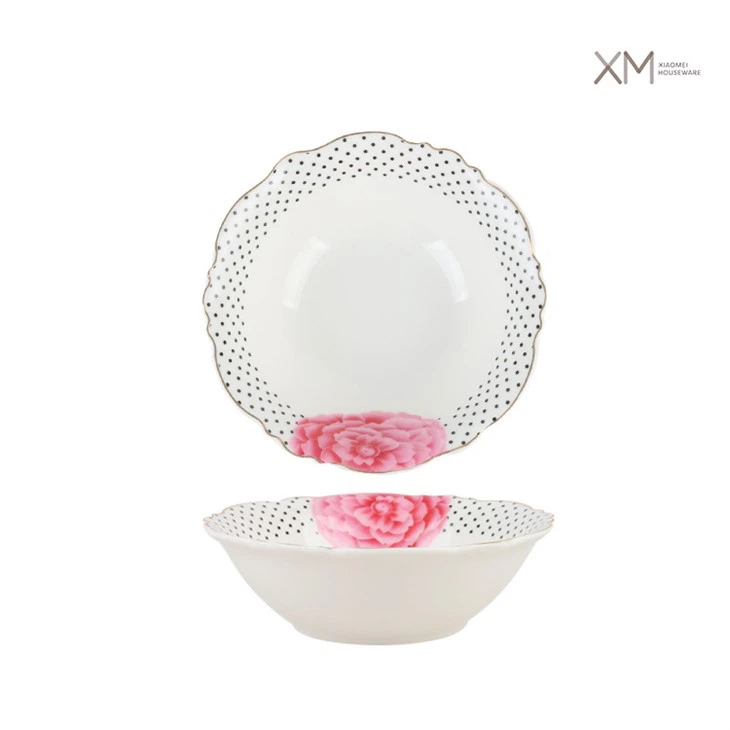
Glazes are like a protective and decorative coating for the bowls. They can make the bowl look shiny, smooth, and more resistant to stains. There are different types of glazes, like transparent glazes that let the natural white color of the porcelain shine through, and opaque glazes that can add a solid color. If you're into more decorative options, check out our Vintage Floral Porcelain Bowl and Floral Porcelain Bowl.
The Making Process
Now that we know the raw materials, let's quickly go over how we turn them into white porcelain bowls. First, we carefully measure and mix the kaolin, feldspar, and quartz with water to create the clay. Then, we use different shaping techniques, like throwing on a potter's wheel or using molds, to give the clay the shape of a bowl.
After shaping, the bowls are left to dry. Once they're dry, they go into the kiln for the first firing, which is called bisque firing. This firing makes the bowls hard enough to handle. After bisque firing, we can apply glazes or colorants if we want. Then, the bowls go back into the kiln for a second firing at a higher temperature. This final firing makes the glaze hard and sets the color, giving us the finished white porcelain bowls.
Why Choose Our White Porcelain Bowls
Our white porcelain bowls are made with the highest - quality raw materials. We source our kaolin, feldspar, and quartz from reliable suppliers to ensure the best results. The careful selection and combination of these raw materials mean that our bowls are not only beautiful but also functional. They're strong, food - safe, and easy to clean.
Whether you're a restaurant owner looking for elegant tableware or a home cook who wants to add a touch of class to your kitchen, our white porcelain bowls are a great choice. And if you're interested in the more decorative options, our Vintage Floral Porcelain Bowl and Floral Porcelain Bowl are sure to impress.
Let's Talk Business
If you're interested in purchasing our white porcelain bowls, we'd love to have a chat with you. We offer competitive prices and can provide custom solutions based on your needs. Whether you need a small order for your home or a large order for your business, we're here to help. Just reach out, and we can start discussing your requirements.
References
- "Ceramics: Science and Technology" by J. Reed
- "The Potter's Book of Materials and Techniques" by Charles F. Binns