


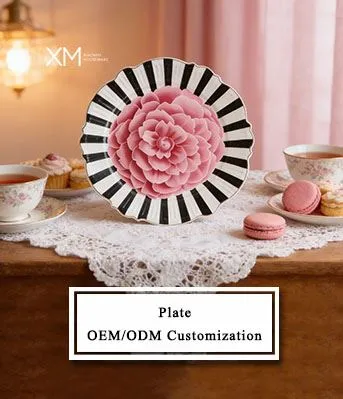




Hey there! As a porcelain dinner plate supplier, I've dealt with all sorts of porcelain products, from the everyday dinner plates to the fancier dessert and soup plates. One question I get asked a lot is, "How can I tell if a porcelain dinner plate is real?" Well, I'm here to share some tips and tricks that I've picked up over the years.
First off, let's talk about the basics of porcelain
Porcelain is a type of ceramic that's made from a special clay called kaolin, along with other minerals. It's fired at really high temperatures, which makes it hard, durable, and often translucent. Real porcelain has a smooth, glass - like finish and a distinct ring when you tap it.
Visual inspection
The first thing you can do is take a good look at the plate.
- Color and finish: Real porcelain usually has a consistent color. If it's hand - painted, the colors should blend smoothly, and there shouldn't be any obvious streaks or blotches. For example, our Blue Porcelain Dessert Plate has a beautiful, even blue hue that looks rich and well - applied. The finish should be glossy and free of bubbles or rough spots. If you see any areas that look dull or have a powdery texture, it might not be real porcelain.
- Patterns and details: High - quality porcelain often has intricate patterns. If it's a printed pattern, it should be sharp and clear. Hand - painted patterns will have a more organic feel, with slight variations that show the artist's touch. Take a look at our Floral Porcelain Dinner Plate. The floral patterns are so detailed that you can see the individual petals and leaves, which is a sign of real porcelain craftsmanship.
The sound test
This is one of the easiest ways to check. Gently tap the plate with a utensil or your finger.
- A clear ring: Real porcelain will produce a clear, ringing sound. It's kind of like the sound you'd hear when you tap a crystal glass. The sound should resonate for a few seconds. If the plate makes a dull, thud - like sound, it's likely not real porcelain. You can try this test on our Blue Porcelain Soup Plate to get an idea of what a real porcelain sound is like.
- Consistency: Make sure to tap the plate in different areas. A real porcelain plate will have a consistent sound all over. If you notice that some parts sound different from others, there could be a problem with the plate.
Weight and feel
- Lightweight yet sturdy: Real porcelain is relatively lightweight compared to other ceramics. But don't be fooled by its lightness; it's also very strong. When you pick up a real porcelain dinner plate, it should feel substantial but not overly heavy. If a plate feels too heavy, it might be made of a different type of ceramic or have some sort of filler.
- Smooth edges: Run your fingers along the edges of the plate. They should be smooth and well - finished. Rough or uneven edges are a sign of poor quality, and it might not be real porcelain.
Check the bottom
- Markings: Many real porcelain plates will have markings on the bottom. These can be a maker's mark, a logo, or a stamp indicating the country of origin. Look for clear, well - defined markings. If the markings are faded, smudged, or look like they've been added later, it could be a red flag.
- Base finish: The bottom of the plate should also have a smooth finish. Some plates might have a slightly different texture on the bottom, like a matte finish, but it should still be free of cracks or chips.
Translucency test
Hold the plate up to a light source.
- Slight translucency: Real porcelain is often slightly translucent. You won't be able to see through it completely, but you should notice a bit of light shining through, especially around the edges. If the plate is completely opaque, it might not be real porcelain.
Price and source
- Price: As a general rule, if a plate is priced extremely low, it's probably not real porcelain. High - quality porcelain takes time and skill to make, so it usually comes with a higher price tag. Of course, there are some good deals out there, but be wary of prices that seem too good to be true.
- Source: Buy from a reputable supplier. As a supplier myself, I know the importance of providing genuine products. Look for suppliers with good reviews and a history of selling quality porcelain.
So, there you have it! These are some of the ways you can tell if a porcelain dinner plate is real. I hope these tips will help you make more informed decisions when shopping for porcelain plates.
If you're interested in purchasing high - quality porcelain dinner plates, dessert plates, or soup plates, we'd love to have a chat with you. Whether you're a restaurant owner looking to stock up on elegant tableware or an individual who loves to collect beautiful porcelain, we can offer you a wide range of options. Just reach out to us for more information and to start a purchase negotiation. We're here to help you find the perfect porcelain plates for your needs.


References
- "Porcelain: A Collector's Guide" by Jane Smith
- "The Art of Porcelain Making" by John Doe