


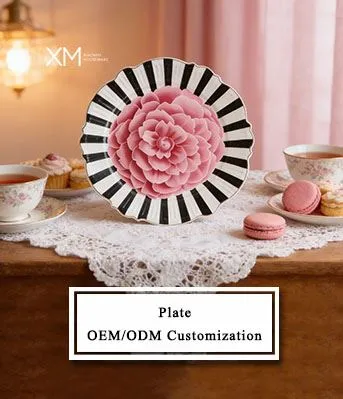




Ceramic round plates are a staple in many households and commercial settings, valued for their aesthetic appeal and functionality. As a supplier of high - quality ceramic round plates, I often encounter the question: "Do ceramic round plates chip easily?" In this blog post, I'll delve into the factors that influence the chipping resistance of ceramic round plates and provide insights to help you make informed decisions.
Composition and Manufacturing of Ceramic Round Plates
Ceramic materials used in plate production can vary widely. Common types include earthenware, stoneware, and porcelain. Each type has its own unique properties that affect its susceptibility to chipping.
Earthenware is the most porous of the three. It is typically fired at lower temperatures, which results in a softer and more brittle material. Earthenware plates are more likely to chip compared to stoneware and porcelain. Stoneware, on the other hand, is fired at higher temperatures, making it denser and stronger. It has better resistance to chipping than earthenware.


Porcelain is the hardest and most durable of the three. It is fired at very high temperatures, resulting in a non - porous and extremely strong material. Porcelain plates, such as our White Porcelain Plate, are known for their excellent chipping resistance. The fine - grained structure of porcelain makes it less likely to crack or chip under normal use.
The manufacturing process also plays a crucial role. High - quality ceramic plates are made with precision and care. During the production, the plates are carefully shaped, glazed, and fired. A well - made plate will have a uniform thickness and a smooth surface, which reduces the risk of chipping. For example, our Underglaze Colour 12 Inch Round Plate Vintage Floral Ceramic Plate is crafted using advanced manufacturing techniques to ensure its durability.
Factors Affecting Chipping
Impact and Handling
One of the most common causes of chipping in ceramic round plates is improper handling. Dropping a plate, even from a short height, can cause it to chip. Plates that are stacked carelessly or banged against hard surfaces are also at a higher risk. When using ceramic plates, it's important to handle them with care. Avoid dropping them or subjecting them to sudden impacts.
Thermal Shock
Ceramic plates can be sensitive to rapid temperature changes. For instance, placing a hot plate directly into cold water or vice versa can cause thermal shock, leading to cracks and chips. To prevent this, it's advisable to let the plate cool down gradually before cleaning it.
Surface Contact
The surface on which the plate is placed can also affect its chipping resistance. Rough or uneven surfaces can cause stress points on the plate, increasing the likelihood of chipping. It's best to use placemats or coasters to protect the plate from direct contact with hard surfaces.
Testing and Quality Assurance
As a supplier, we take quality assurance seriously. Our ceramic round plates undergo rigorous testing to ensure their chipping resistance. We conduct impact tests, where plates are dropped from a specific height onto a hard surface to simulate real - life scenarios. We also test for thermal shock resistance by subjecting the plates to rapid temperature changes.
Only plates that meet our strict quality standards are released to the market. Our Porcelain Dinner Plate has passed all these tests, guaranteeing its durability and resistance to chipping.
Tips for Maintaining Ceramic Round Plates
To extend the lifespan of your ceramic round plates and minimize the risk of chipping, here are some useful tips:
- Handle with Care: Always pick up and put down plates gently. Avoid sliding them across the table or stacking them too tightly.
- Use Appropriate Utensils: Metal utensils can scratch and chip ceramic plates. Opt for wooden, plastic, or silicone utensils instead.
- Clean Properly: Wash plates in warm, soapy water and avoid using abrasive sponges or harsh chemicals. Rinse thoroughly and dry with a soft cloth.
- Store Correctly: Store plates in a padded cabinet or use plate dividers to prevent them from rubbing against each other.
Conclusion
In conclusion, whether ceramic round plates chip easily depends on several factors, including the type of ceramic, manufacturing quality, handling, and maintenance. High - quality porcelain plates, like the ones we supply, are less likely to chip compared to earthenware. By understanding the factors that affect chipping and following the tips for maintenance, you can enjoy your ceramic round plates for a long time.
If you're in the market for high - quality ceramic round plates, we'd love to hear from you. Our plates are not only beautiful but also highly durable. Contact us to discuss your procurement needs and let us help you find the perfect ceramic round plates for your home or business.
References
- "Ceramics: Science and Technology" by J. Reed
- "The Complete Guide to Ceramics" by A. Smith