


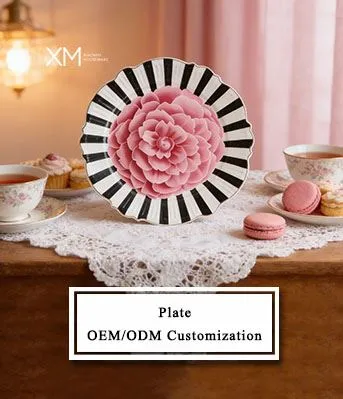




Are ceramic round plates heavy or light? This is a question that often comes to the minds of customers when they are considering purchasing tableware. As a supplier of Ceramic Round Plate, I've had numerous discussions with clients about this very topic. In this blog, I'll delve into the factors that determine the weight of ceramic round plates and help you understand whether they are heavy or light.
Understanding Ceramic Materials
Ceramics are made from a variety of raw materials, primarily clay. Different types of clay have different properties, which can significantly affect the weight of the final product. For instance, porcelain clay, which is known for its fine texture and translucency, is generally lighter than earthenware clay. Porcelain is fired at a higher temperature, resulting in a more dense and less porous material. This density, however, does not necessarily mean it is heavy. In fact, the high - firing process makes porcelain more compact and often lighter in weight compared to earthenware.
Earthenware, on the other hand, is made from a coarser clay and is fired at a lower temperature. It has a more porous structure, which can make it heavier. The porosity also means that earthenware may absorb more water, adding to its weight. Stoneware is another type of ceramic that falls between porcelain and earthenware. It is fired at a relatively high temperature, resulting in a dense and durable material. Stoneware ceramic round plates can vary in weight depending on the specific clay composition and the manufacturing process.
The Role of Size and Thickness
The size and thickness of a ceramic round plate are two crucial factors in determining its weight. Larger plates will naturally be heavier than smaller ones, assuming the same material and thickness. A dinner - sized ceramic round plate with a diameter of 10 - 12 inches will be heavier than a dessert plate with a diameter of 6 - 8 inches.
Thickness also plays a significant role. Thicker plates are heavier because they contain more ceramic material. Some customers prefer thicker plates for their perceived durability and sturdiness. However, a very thick plate may be too heavy to handle comfortably, especially for everyday use. Manufacturers often strike a balance between thickness and weight to meet the needs of different customers. For example, a standard dinner plate may have a thickness of around 4 - 6 millimeters, which provides a good balance between durability and weight.
Design and Decoration
The design and decoration of a ceramic round plate can also contribute to its weight. Intricate designs, such as raised patterns or embossing, require additional ceramic material, which can make the plate heavier. Similarly, plates with multiple layers of glaze or hand - painted decorations may be slightly heavier due to the added materials.
However, modern manufacturing techniques have allowed for more lightweight designs without sacrificing aesthetics. For example, some manufacturers use digital printing technology to apply decorations, which adds very little weight to the plate. Additionally, new glazing techniques can create a thick - looking finish without actually adding much material.
Comparing with Other Materials
When considering whether ceramic round plates are heavy or light, it's useful to compare them with other common tableware materials. Compared to glass plates, ceramic plates are generally heavier. Glass is a less dense material, and glass plates are often thinner, resulting in a lighter overall weight.
On the other hand, compared to metal plates, ceramic plates can be lighter. Metal plates, especially those made of stainless steel or cast iron, can be quite heavy. Ceramic plates offer a middle - ground option, providing a good balance between durability and weight.
Customer Preferences
Customer preferences regarding the weight of ceramic round plates vary widely. Some customers prefer heavier plates because they associate weight with quality and durability. A heavier plate may feel more substantial in the hand and may seem less likely to break or chip. These customers often use ceramic plates for formal dinners or special occasions.
Other customers, however, prefer lighter plates for everyday use. Lighter plates are easier to handle, especially when carrying multiple plates at once. They are also more convenient for children or elderly people who may have difficulty lifting heavier objects. As a supplier, I've noticed a growing trend towards lighter ceramic round plates, especially for the consumer market.
Practical Considerations
In addition to personal preferences, there are some practical considerations when it comes to the weight of ceramic round plates. For restaurants and catering services, the weight of the plates can impact labor costs. Heavier plates require more effort to carry and wash, which can increase the workload for staff. On the other hand, if the plates are too light, they may be more likely to tip over or move around during service.
For home use, the weight of the plates can affect storage and handling. Heavier plates may require more sturdy cabinets or shelves to prevent them from breaking. Lighter plates are easier to stack and store, and they are less likely to cause damage if they accidentally fall.
Our Offerings as a Supplier
As a supplier of Ceramic Round Plate, we offer a wide range of plates with different weights to meet the diverse needs of our customers. We have both lightweight and heavy - duty options available. Our lightweight plates are made from high - quality porcelain or stoneware, using advanced manufacturing techniques to reduce weight without compromising on quality.
Our heavy - duty plates are designed for those who prefer a more substantial feel. These plates are thicker and more durable, making them suitable for commercial use or for customers who want plates that will last a long time. We also offer custom - made options, where customers can choose the size, thickness, and design of their ceramic round plates.
Conclusion
So, are ceramic round plates heavy or light? The answer is that it depends on several factors, including the type of ceramic material, size, thickness, design, and customer preferences. While some ceramic round plates can be heavy, especially larger or thicker ones, there are also many lightweight options available on the market.

Whether you are a restaurant owner looking for durable plates for your establishment or a homeowner searching for the perfect tableware for your family, we have the right ceramic round plates for you. If you are interested in our products, we invite you to contact us for more information and to discuss your specific requirements. We are always happy to assist you in finding the best ceramic round plates for your needs.
References
- "Ceramics: Science and Technology" by Janick M. Dubois
- "Tableware Design and Trends" by a leading industry research group