





Vintage porcelain bowls are not merely vessels for holding food; they are tangible links to the rich tapestry of art history. As a supplier of vintage porcelain bowls, I have had the privilege of exploring the intricate connection between these exquisite pieces and the broader context of art history. In this blog post, I will delve into the historical significance, artistic techniques, and cultural influences that make vintage porcelain bowls a fascinating subject of study.
Historical Significance
Porcelain, often referred to as "white gold," has a long and storied history that dates back thousands of years. The invention of porcelain is attributed to the Chinese during the Tang Dynasty (618 - 907 AD), although early forms of proto - porcelain can be traced even further back. Chinese porcelain quickly became highly sought after in international trade, and its influence spread across Asia, the Middle East, and eventually to Europe.
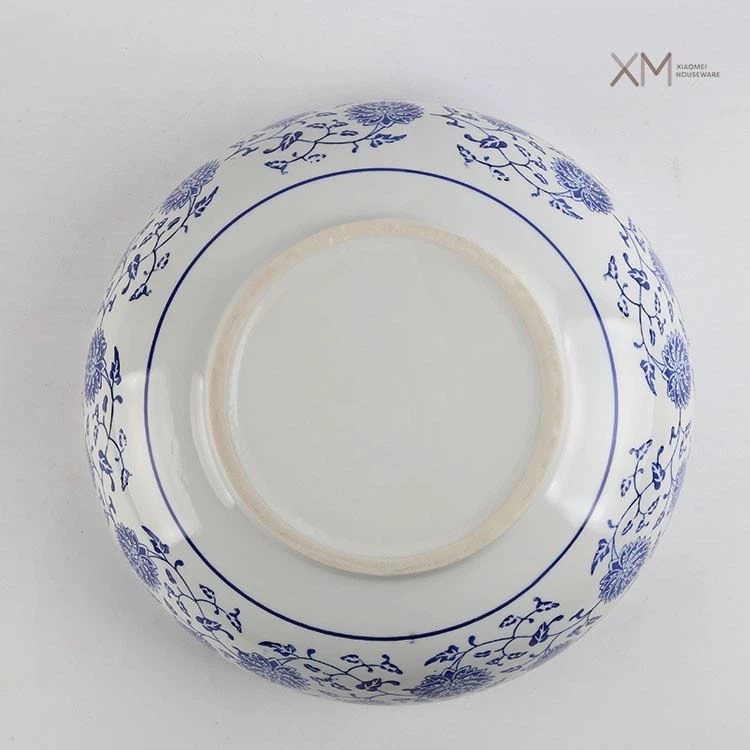
During the Ming Dynasty (1368 - 1644 AD), Chinese porcelain reached new heights of artistic excellence. The blue - and - white porcelain, in particular, became iconic. The cobalt blue pigment used in underglaze painting created stunning and intricate designs on the white porcelain surface. These bowls were not only functional but also served as status symbols. They were often used in imperial courts and given as diplomatic gifts. For example, a Vintage Floral 11.5 Inch Salad Ceramic Bowl Underglaze Colour Blue And White Porcelain from this era would have been a precious item, showcasing the skill of Chinese artisans and the cultural sophistication of the time.
In Europe, the arrival of Chinese porcelain in the 16th and 17th centuries had a profound impact on the local art scene. European artists and craftsmen were inspired by the beauty and quality of Chinese porcelain and attempted to replicate it. This led to the development of European porcelain factories, such as Meissen in Germany and Sèvres in France. These factories produced their own unique styles of porcelain bowls, often incorporating elements of European art, such as Rococo and Neoclassical designs.
Artistic Techniques
The creation of vintage porcelain bowls involves a complex and highly skilled process. In Chinese porcelain production, the first step is to prepare the porcelain body. The clay is carefully selected and refined to ensure a smooth and pure texture. It is then shaped into the desired form of the bowl, either by hand - throwing on a potter's wheel or by using molds.
After shaping, the bowl is fired in a kiln at a high temperature to harden the porcelain. This first firing is called the bisque firing. Once the bisque - fired bowl is cooled, the decorative elements are added. In the case of blue - and - white porcelain, the cobalt blue pigment is applied to the surface using a brush. The designs can range from simple geometric patterns to elaborate floral motifs.
After the painting is complete, a transparent glaze is applied over the design. The bowl is then fired again at a higher temperature in a process called the glaze firing. The high temperature causes the glaze to melt and fuse with the porcelain body, creating a smooth, shiny surface that protects the design.
European porcelain factories also developed their own unique techniques. For example, the Meissen factory in Germany was known for its use of overglaze painting. After the bisque firing and the application of a white glaze, additional colors were painted on the surface of the bowl and then fired at a lower temperature. This allowed for a wider range of colors and more detailed designs.
Cultural Influences
Vintage porcelain bowls are also a reflection of the cultural values and beliefs of the societies in which they were produced. In Chinese culture, porcelain has long been associated with purity, elegance, and longevity. The floral motifs often found on Chinese porcelain bowls, such as peonies and chrysanthemums, have symbolic meanings. Peonies represent wealth and honor, while chrysanthemums symbolize longevity and nobility.

In European culture, porcelain bowls were often used in formal dining settings and were seen as a sign of refinement and luxury. The designs on European porcelain bowls were influenced by the prevailing art movements of the time. For example, during the Rococo period, porcelain bowls were decorated with elaborate, curvilinear designs, often featuring cherubs, flowers, and scrolling patterns. These designs reflected the light - hearted and opulent nature of the Rococo style.
Collectibility and Investment
In addition to their artistic and historical value, vintage porcelain bowls have also become highly collectible items. Collectors are drawn to the beauty, rarity, and historical significance of these bowls. A well - preserved vintage porcelain bowl can command a high price at auctions and in the antique market.
As a supplier of vintage porcelain bowls, I have seen the growing interest in these pieces from collectors and enthusiasts around the world. Whether it is a Vintage Floral Porcelain Bowl with a delicate hand - painted design or a Floral Porcelain Bowl from a renowned European factory, each bowl has its own story to tell.
Conclusion
In conclusion, vintage porcelain bowls are much more than just decorative objects. They are windows into the past, offering a glimpse into the art, culture, and technology of different eras. The connection between vintage porcelain bowls and art history is undeniable. From the ancient Chinese kilns to the European porcelain factories, these bowls have played a significant role in the development of art and design.
If you are interested in adding a piece of art history to your collection or are looking for unique items for your business, I invite you to explore our range of vintage porcelain bowls. We are committed to providing high - quality, authentic pieces that showcase the beauty and craftsmanship of the past. Contact us to start a discussion about your procurement needs and discover the perfect vintage porcelain bowl for you.
References
- "Chinese Ceramics: From Prehistory to the Present" by Rosemary Scott
- "European Porcelain: A History" by Geoffrey Godden
- "The Art of Porcelain: Chinese, Japanese, and Korean" by Craig Clunas